Santa Rosa, CA · Garage Door Service
Garage Door Service Built Around Santa Rosa's Housing Stock
Garage door repair and service for Santa Rosa homes built between 1938 and 1993, from Memorial Hospital Neighborhood to Oakmont Village and beyond.
- Repairs & new doors
- Springs & openers
- Serving 8 nearby communities
What You Pay
We don't post a flat number for garage door service because what a job costs depends on what's actually wrong, and that varies a lot across Santa Rosa. A worn roller on a 1980s double door is a different job than a torsion spring on a 1960s single door with side-mount hardware, and the parts aren't priced the same. What we can tell you is that most of the houses we work on in this area were built between 1938 and 1993, with the bulk of the stock dating to the 1960s and 70s across the 28 named neighborhoods and nearby towns we cover. That matters because a door's age tells us more about likely cost than its symptom does - original hardware on a 1960s door often needs full replacement parts that a newer door wouldn't. Over the phone, we'll ask the age of the house and what the door is doing before we guess at a number. We'd rather look at it in person and give you a real figure than quote something generic that falls apart once a tech opens the panel. If a repair starts creeping toward the cost of a new door, we'll say so plainly instead of running up a bill on an old unit.
Can You Do This Yourself
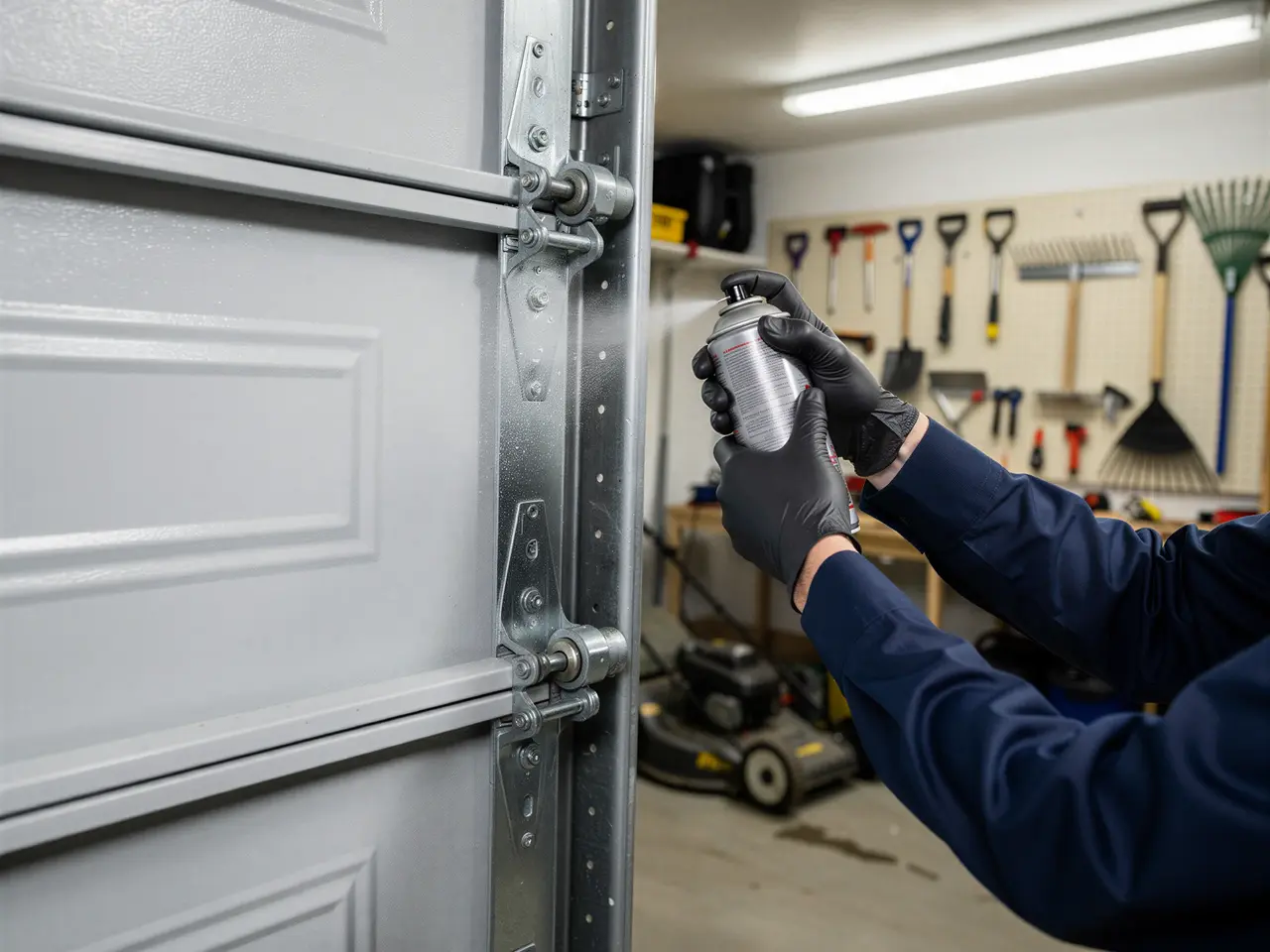
Some of it, yes. Lubricating rollers and hinges, tightening loose bolts on the track, clearing debris from the sensor eyes - any homeowner with a stepladder can do that safely. What you shouldn't touch is the torsion spring. On the older stock common here, built mostly in the 1960s and 70s, those springs are wound under enough tension to break a bone or worse if the winding cone slips. We also don't recommend DIY on cable replacement for the same reason - a snapped cable under load whips hard. If your door is sagging on one side, binding in the track, or the opener is straining and reversing, that's a service call, not a weekend project. One honest limitation: we don't do cosmetic work like repainting or re-skinning panels just to freshen up curb appeal - that's a carpenter or painter's job, not ours. We stick to what makes the door move safely and keeps it moving.
Why It Happens Here
The reason we see the same failures over and over in Santa Rosa comes down to the age of the housing. With median construction around 1972 and most homes dating 1938 to 1993, a huge share of the doors and openers we service were installed, or last fully replaced, decades ago on hardware that's no longer made the way it used to be. Original torsion springs lose tension gradually over 7-9 years under normal cycling, but on a house built in the 1960s that spring may have been swapped once since, meaning the replacement itself is now old. The mild temperate climate here doesn't put the same stress on doors that extreme heat or heavy snow load would elsewhere, so wood warping and metal fatigue from weather extremes aren't the main driver - it's simple age and cycle count. That's a different failure pattern than a newer subdivision would show, and it's why torsion spring fatigue and worn rollers show up so often across the older pockets of town, from the Memorial Hospital Neighborhood out through Southwest Santa Rosa and Wright Area Action Group.
What You Are Seeing
If your garage door is noticeably heavier to lift by hand than it used to be, or the opener strains and reverses partway up, that's almost always a torsion spring losing tension - common on the older housing stock that makes up most of this area. A door that drifts shut on its own, or one side that visibly sags lower than the other when it's halfway open, points to the same thing, often paired with a worn cable. Grinding or popping noises during travel usually mean a roller has worn out of its track, which happens more on original hardware that's never been upgraded. If the door opens fine but won't close, or closes and immediately reverses, check the sensor eyes first - a cobweb or misalignment causes more service calls than people expect. None of these are climate-driven failures in our mild temperate conditions; they're mechanical wear tied to how long the hardware has been in service. If you're not sure which of these you're looking at, describe what you're seeing when you call and we'll tell you whether it's a quick fix or something that needs a look.
Frequently asked questions
Why does my garage door feel heavy to lift all of a sudden?
That's almost always a torsion spring losing tension. It happens gradually, so you might not notice until it's lost enough strength that the opener starts straining too. It's common on the older housing stock in this area, where original or once-replaced springs are decades old. Don't try to adjust the spring yourself - call for a service visit.
Does Santa Rosa's climate cause garage door problems?
Not much directly. We're in a mild temperate band here, without the extreme heat or snow load that stresses doors in harsher climates. Most of what we see is simple mechanical wear tied to the age of the house and the number of open-close cycles the door has logged, not weather damage.
How old is my door likely to be if I don't know?
If your house was built in the typical range for this area, 1938 to 1993 with a lot of stock from the 1960s and 70s, your original door or opener could be anywhere from 30 to 85 years old if it's never been replaced. We can usually tell you more once we see the hardware and spring type in person.
Do you serve areas outside Santa Rosa proper?
We cover the surrounding area including Fulton, Larkfield-Wikiup, Rohnert Park, Sebastopol, Cotati, and Windsor, among other nearby towns within roughly a 20-mile radius. Call and tell us where you are and we'll confirm.
By Neighborhood
Garage Door Service across the Santa Rosa area
We also handle garage door service in these Santa Rosa-area suburbs.
Book garage door service in Santa Rosa
Call now or request a quote - tell us what the door is doing and where you are.