Santa Rosa, CA · Garage Door Service
When an Older Door in Santa Rosa Is Still Worth Fixing
Santa Rosa homes mostly date 1938-1993. Here's how that housing stock and our mild climate affect whether a repair or replacement makes sense for your door.
- Repairs & new doors
- Springs & openers
- Serving 8 nearby communities
The Situation
Most of the housing across Santa Rosa and the 28 neighborhoods we work in went up between 1938 and 1993, with the bulk of it dating to the 1960s and 70s. That means a lot of garages still have the original door, or a replacement from decades back, paired with hardware nobody has made in years. We get calls where the door itself is fine but the spring size, the track width, or the opener bracket doesn't match anything on the shelf at the supply house anymore.
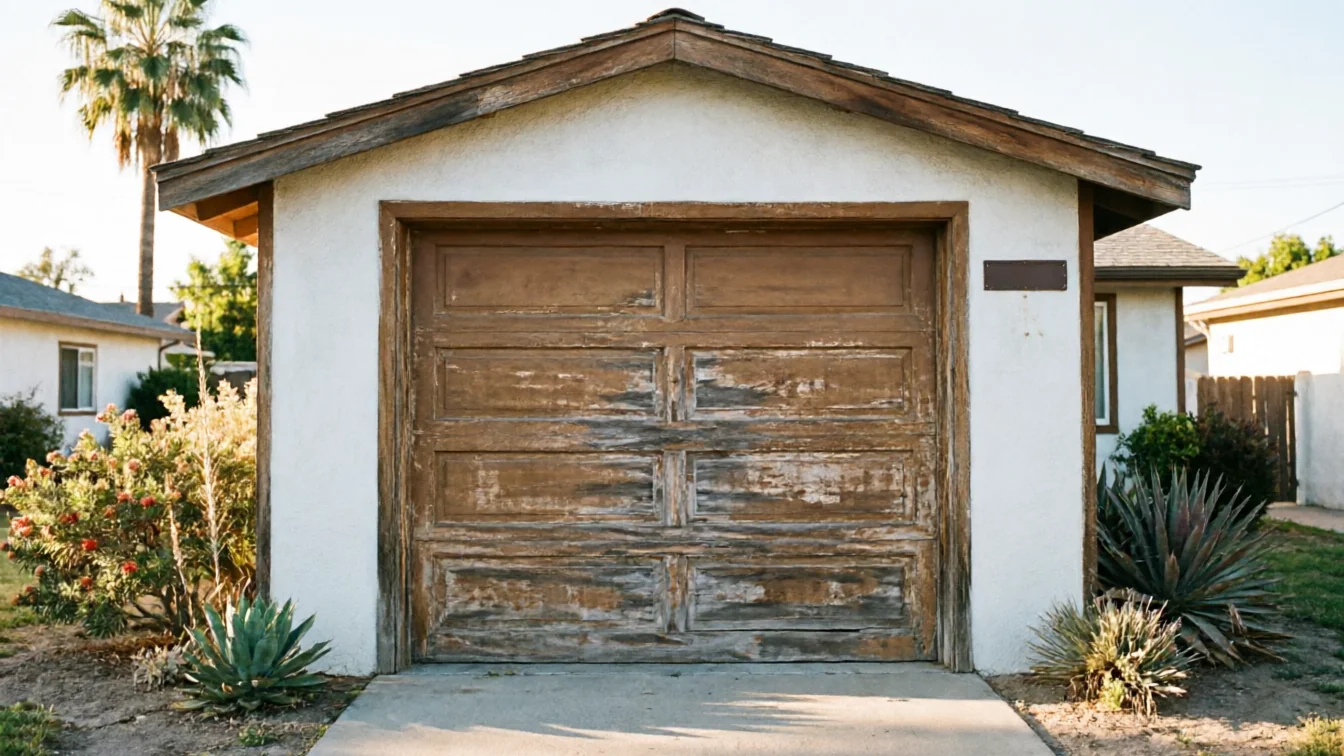
That's the real question behind "is it worth fixing": not whether the door still closes, but whether the parts on it can still be serviced without a full teardown. A 1968 house with its original steel door and a worn torsion spring is usually a straightforward repair. The same house with a warped wood panel door from the same era is a different conversation, because wood doors from that period often aren't salvageable once they've racked or delaminated.
We see this across the service area, from the Memorial Hospital neighborhood out to Oakmont Village. The age of the housing stock is the single biggest factor in whether a job is a repair or a replacement, more than how the door looks from the driveway.
What Local Conditions Do
Santa Rosa sits in a mild temperate band, which is good news and bad news. The good news: we don't get the freeze-thaw cycles that crack door panels or seize springs the way colder climates do, so hardware here tends to last on its own merits rather than fail early from weather stress. The bad news is that mild weather hides problems. A spring or roller that would announce itself with a loud failure somewhere with harsh winters just quietly wears down here, and homeowners don't notice until the day it won't lift at all.
This matters for the fix-or-replace call. In a harsher climate, weather damage alone can push you toward replacement regardless of the door's age. Here, the deciding factor is almost always the mechanical wear and the parts availability tied to the house's build era, not storm damage or moisture intrusion. If your door is from the 1960s-70s wave and it's never had major weather exposure, the panels themselves are often still sound even when the springs and rollers are shot.
What You Pay
We don't publish flat prices here because the honest answer depends on what's actually wrong and what parts your door needs, and that varies a lot given how much of the housing stock predates standardized hardware sizing. What we can tell you is how to think about the tradeoff: a torsion spring and roller job on a structurally sound door almost always costs less than panel replacement or a full door swap, by a wide margin.
Santa Rosa's median household income sits at $108,261 across the area, and most of our calls are for houses built well before current door standards existed, so the repair-versus-replace math often comes down to whether we can still source parts for the original hardware. When we can, repair is usually the better value. When we can't, chasing a sourced part for an obsolete track system can end up costing more in labor than a new door would.
What to Check
Before you call anyone, open and close the door by hand with the opener disconnected. If it moves smoothly and stays wherever you leave it, the springs are probably fine and the opener is doing all the work it shouldn't have to. If it's heavy, uneven, or drops on one side, that's spring wear, common in doors from the 1960s-70s era that are now decades past their spring's rated cycle life.
Check the panels for delamination or soft spots, especially on original wood doors from that build era. Steel doors from the same period usually just need hardware, not replacement. Look at the track for rust or bent rail, which shows up more on doors that have sat unused on one side for years.
One honest limitation: we can't always get an exact match for discontinued track or opener brackets from houses built before the 1990s standardization. Sometimes the fix is a compatible retrofit part, and sometimes it genuinely isn't available, which is when we'll tell you straight that replacement is the better call rather than quote you for a part hunt that may not pan out.
Frequently asked questions
My house was built in the 1960s, is the original garage door hardware still fixable?
Often yes. Steel doors from that era usually just need new springs, rollers, or cables, which we can source even if the exact original brand is gone. Wood doors from the same period are more likely to have structural issues that make replacement the better call.
Does Santa Rosa's climate shorten garage door lifespan?
Not really. The mild temperate band here means less freeze-thaw stress than colder regions, so panels and hardware tend to wear out from age and use rather than weather damage. That also means problems can go unnoticed longer since there's no dramatic weather event forcing the issue.
How do I know if my door needs a new spring or a whole new door?
Disconnect the opener and lift the door by hand. If it's smooth and balanced, the spring is fine. If it's heavy, uneven, or won't stay put, that's spring wear, a repair. Replacement comes into play when panels are warped, delaminated, or the track hardware is too obsolete to source.
Related garage door services in Santa Rosa
More garage door guides
Book garage door service in Santa Rosa
Call now or request a quote - tell us what the door is doing and where you are.