
Santa Rosa, CA · Garage Door Service
What's Actually Included When We Come Out
In Santa Rosa, a service call checks springs, tracks, cables, and openers on homes built mostly between 1960 and 1993, priced by what the tech actually finds.
- Repairs & new doors
- Springs & openers
- Serving 8 nearby communities
The Situation
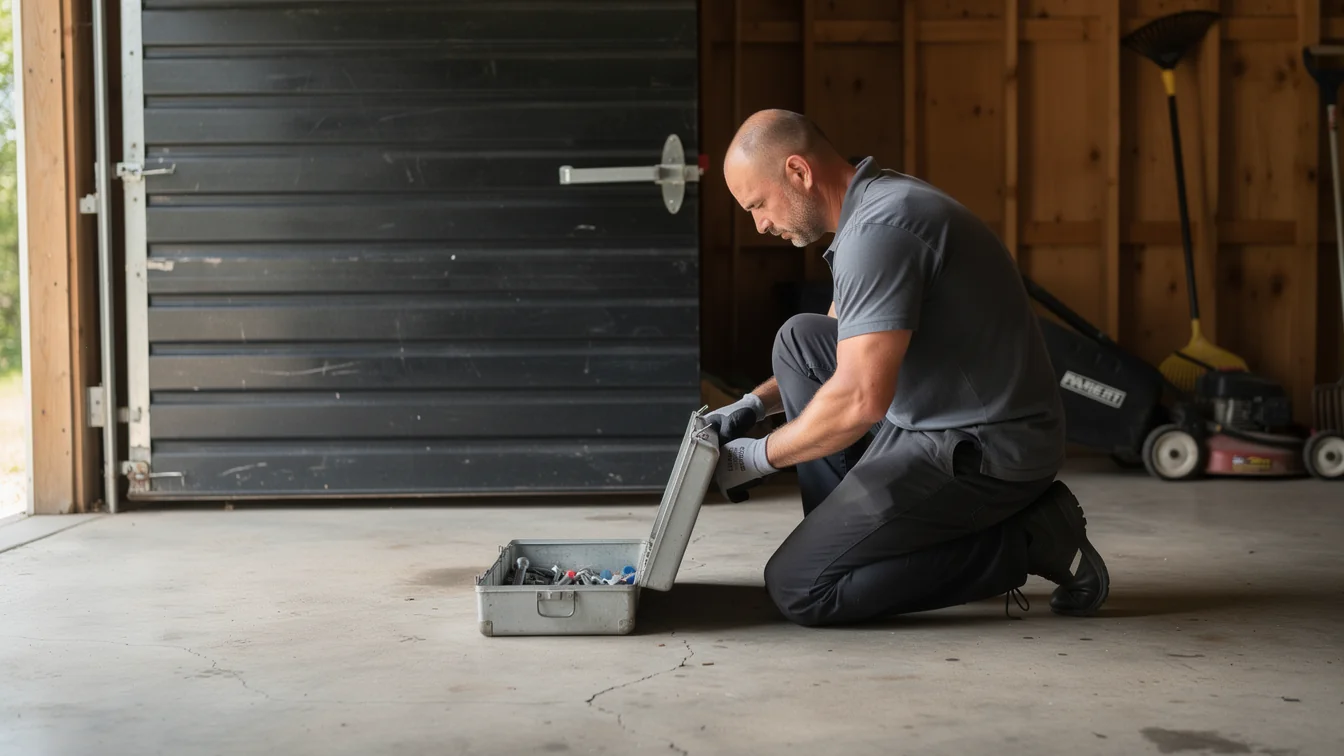
Most calls start the same way: a door that worked fine yesterday doesn't open today, or it opens with a bang and a shudder that wasn't there last month. What the tech finds once he's in your garage depends a lot on when your house went up. Housing stock across this service area runs from 1938 to 1993, with the median landing around 1972, and the mix shows up as different hardware generations sitting on the same street. One house still has its original one-piece door on side-mounted torsion hardware. The place two doors down got a retrofit opener in the 90s bolted onto older track. Across the 28 named areas we work in, from the neighborhoods close to Memorial Hospital out to the Oakmont Village side, that range means no two service calls look quite alike before the tech even opens his toolbox. A service call is a diagnosis first - spring tension, cable wear, track alignment, opener wiring, sensor eyes - and then a decision about whether to repair what's there or tell you honestly that it's not worth chasing anymore.
What Local Conditions Do
This area sits in a mild temperate band, which matters more than people think. We're not dealing with the deep freeze-thaw cycling that splits plastic idler wheels and shrinks steel cable in harsher climates, and we're not baking rubber seals flat in extreme desert heat either. What that means in practice: when a door fails here, it's usually age and cycle count doing the damage, not weather shock. A spring on a 1972-era torsion bar has simply done its 10,000 cycles and it's done, not snapped from a cold snap. That's actually useful information during a service call, because it narrows down what we're looking for. We spend less time checking for weather-cracked components and more time checking wear patterns tied to how old the hardware is and how often the door gets used. It also means a well-maintained door here can run longer before it needs major work than one in a place with harsher swings. The honest limitation: mild climate doesn't mean no climate. Original hardware from the 1960s and 70s still wears out eventually, and lubrication and inspection still matter - just for different reasons than frost.
What You Pay
We don't quote a number before we've seen the door, because what you pay is tied directly to what the tech finds, not a flat visit fee dressed up as a diagnosis. A call that ends in re-tensioning a spring looks nothing like one that ends in replacing an opener motor or swapping out a bent track section. What we can tell you is how the decision usually gets made here. With 27,340 owner-occupied houses out of 60,058 households across this service area, most of our calls come from people who plan to stay in the house and want the job done right, not patched to last another season. At a median household income of $108,261 in this area, we see that preference play out in real choices - once a door from the 1960s or 70s starts stacking failures (a worn spring plus a cracked roller plus an aging opener), more owners here choose full replacement over piecing it back together part by part. That's not upselling, it's math: three repairs on old hardware can add up to more than one new system.
What to Check
Before you call, a few minutes of looking can tell you a lot. Stand back and watch the door open and close - does it move evenly on both sides, or does one corner lag? Uneven travel usually points to a spring or cable problem, not the opener. Listen for grinding or popping, which often means a roller or bearing is on its way out. Check the tracks for visible gaps, rust, or bends, especially on older houses where the original hardware from the 1960s and 70s is still in place. Pull the emergency release and try moving the door by hand - if it's heavy or unbalanced, that's a spring issue, and you should stop there and call rather than force it. One limitation worth saying plainly: we don't chase every noise with a full teardown on the first visit. If a door that's original to a 1972-era house has a laundry list of small failures, sometimes the honest answer is that the hardware has reached the end of its run, and the better use of your money is a new system rather than a fourth repair on the old one.
Frequently asked questions
How long does a typical service call take?
We don't have a fixed duration to quote you, since it depends on what we find once the door's open. A spring adjustment is quick. Tracking down an intermittent opener fault or replacing track sections on an older setup takes longer. We'll give you a time estimate on site once we've seen the actual problem.
Do you work on older torsion springs from houses built in the 60s and 70s?
Yes, and in this service area that's a lot of what we see, since the housing stock here runs mostly 1960s through the early 90s. Original hardware from that era still shows up regularly, and we service and replace it as needed.
Does Santa Rosa's climate affect how often doors need service?
It affects what fails, more than how often. Because this area sits in a mild temperate band, we see fewer weather-driven failures like cracked plastic from hard freezes, and more straightforward wear from age and cycle count on older hardware.
Should I repair or replace an old door?
It depends on how many things are wrong at once. If it's one issue - a spring, a sensor, a roller - repair usually makes sense. If a 1970s-era door is stacking multiple failures, replacement often costs less over time than repeated repair calls, and we'll tell you honestly which situation you're in.
Related garage door services in Santa Rosa
More garage door guides
Book garage door service in Santa Rosa
Call now or request a quote - tell us what the door is doing and where you are.