Santa Rosa, CA · Garage Door Service
Why Garage Doors in Older Santa Rosa Homes Lack Insulation
Santa Rosa's housing stock, mostly built 1938 to 1993, means many garage doors predate insulation codes - here's what that means for comfort and repairs.
- Repairs & new doors
- Springs & openers
- Serving 8 nearby communities
The Situation
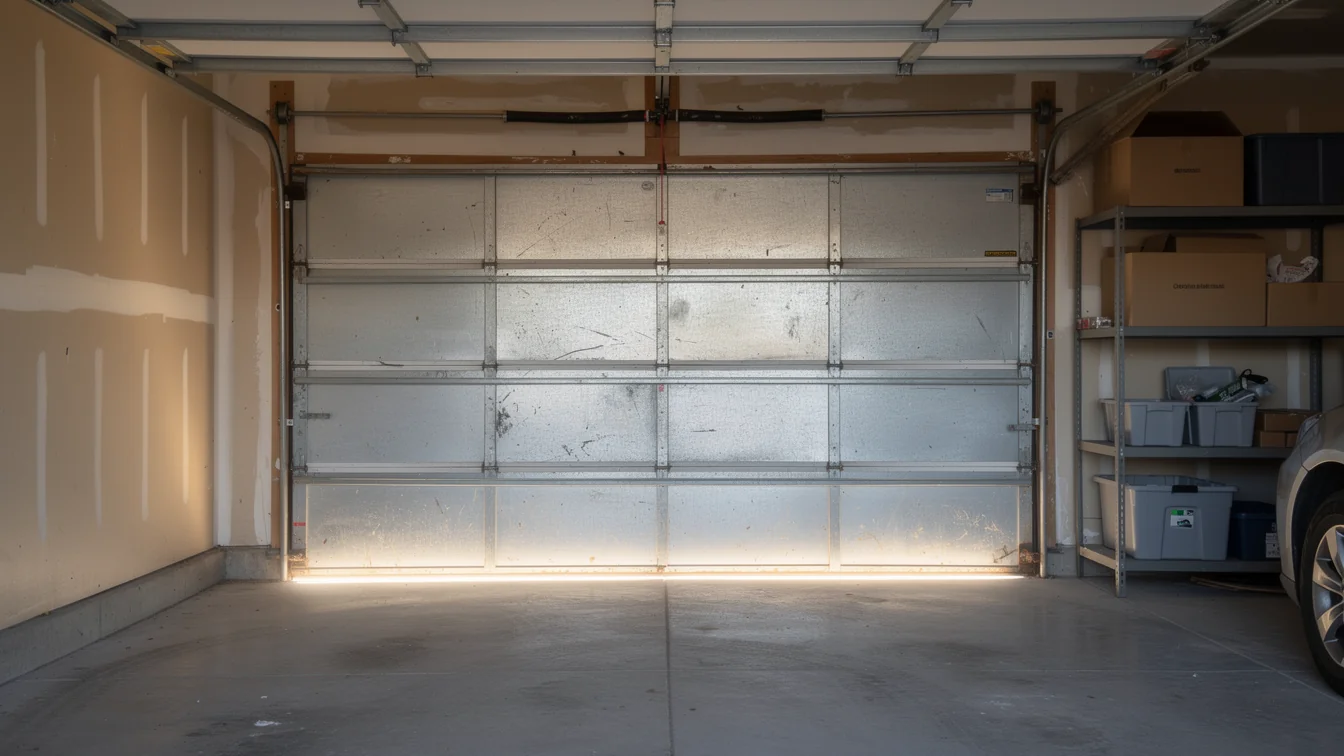
Santa Rosa's housing was built mostly between 1938 and 1993, with the median year landing around 1972. Walk through any of the 28 named areas that make up this town, from the Memorial Hospital Neighborhood right in the core to Oakmont Village six miles east, and the garage door you find is usually the same type: a single-layer steel panel hung on the original tracks, installed back when nobody wrote insulation requirements into a residential garage door. That's not a defect. It's just when the house was built. Insulated door panels with a foam core between two steel skins became common later, and a lot of Santa Rosa's housing predates that shift entirely. The practical result is a door that's thinner, lighter, and noisier than what you'd buy new today, on hardware that's now 50-plus years old in a lot of cases. None of that means the door is broken. It means the door was never built to the standard a newer subdivision would use, and repairs on it need to account for that difference rather than assume parts and specs that match a 2020s install.
What Local Conditions Do
Santa Rosa sits in a mild temperate band, which changes the math on insulation more than people expect. In a climate with hard freezes and big summer heat swings, an uninsulated steel panel expands and contracts enough to loosen fasteners and warp over time. Santa Rosa doesn't put a door through that kind of stress. The mild climate here is part of why so many of these original 1960s and 70s doors are still hanging - the panel itself isn't fighting the weather the way it would elsewhere. What the mild climate doesn't fix is sound and condensation. An uninsulated door amplifies road noise and rattles more in the opener motor and track, and on cool mornings you still get moisture forming on the inside face of bare steel. So the complaints we hear from owners of these older Santa Rosa doors tend to be about noise and a drafty feel at the bottom seal, not about the panel cracking or buckling from weather extremes. That's a different repair conversation than you'd have in a place with real winters, and it means a straight insulation retrofit solves more of the actual complaint here than a full structural replacement would.
What You Pay
We don't have a flat number to quote you here, and giving you one anyway would be worse than being honest about it - cost depends on whether you're retrofitting insulation into an existing panel, replacing the whole door, or just dealing with worn weatherstripping and hardware fatigue from a door that's been in service since the 1960s or 70s. What we can tell you is what drives the decision. With 27,340 owner-occupied houses across this service area, a lot of them carrying that original-era single-layer door, the retrofit-versus-replace question comes up constantly. Santa Rosa's median household income of $108,261 puts a real insulation retrofit kit within reach for a lot of owners, rather than making full replacement the only option. If the door itself is sound - no rust-through, no bent track, hardware that still operates - a retrofit kit is usually the lower-cost route. If the springs, rollers, and track are also original to the house, you're often better off putting the money into a new insulated door rather than layering a retrofit onto hardware that's near the end of its life anyway.
What to Check
Start by looking at the panel itself. If it's a single layer of steel with no visible core material when you look at the edge of a cut-out (like a vent or window frame), it's uninsulated, which fits the profile of Santa Rosa's 1960s-70s stock. Check the bottom seal - on a door this old it's usually flattened or cracked, and that's where most of the draft and noise comes in, often before the panel itself is the problem. Listen to the opener motor: more vibration transfer through an uninsulated panel can sound like a motor problem when it's really just the door itself resonating. Check hardware dates where you can - springs, rollers, and cable are consumable parts regardless of insulation, and on a door installed when the house was built in the 60s or 70s, they're well past a normal service life. If you're weighing a retrofit kit, measure the panel depth first; not every original steel door has the clearance for an insulation kit plus the vapor barrier, and a Santa Rosa house from this era can vary panel to panel.
Frequently asked questions
Does my garage door need insulation given how mild the weather is here?
Not for temperature control the way it would in a harsher climate - Santa Rosa's mild temperate conditions mean the door isn't fighting freeze-thaw stress. The real benefit here is noise reduction and cutting down condensation on the inside face of the panel, which shows up often on the original steel doors from the 1960s and 70s.
Is it worth retrofitting insulation into my original 1970s door?
If the panel, track, and hardware are all still sound, a retrofit kit is usually the lower-cost route and works fine in Santa Rosa's mild climate. If the springs or rollers are also original to the house, the hardware is likely near the end of its service life, and that tips the math toward full replacement instead.
How do I know if my door predates insulation standards?
If your house falls in the common 1960s-70s band that makes up most of Santa Rosa's housing stock, check the edge of any cut-out in the panel - a vent or window frame. A single layer of steel with no visible core material means it was built before insulated panels were standard.
Related garage door services in Santa Rosa
More garage door guides
Book garage door service in Santa Rosa
Call now or request a quote - tell us what the door is doing and where you are.