
Santa Rosa, CA · Garage Door Service
Weather Seals and Drafts: What Santa Rosa's Older Garages Face
Most Santa Rosa garages date to the 1960s and 70s, original seals long gone. Here's what the area's mild climate does to weather seals and drafts.
- Repairs & new doors
- Springs & openers
- Serving 8 nearby communities
The Situation
Most of the houses we work on sit on stock built between 1938 and 1993, with the median landing around 1972. That covers the 28 named areas we cover, and across nearly all of them the bulk of the garages are 1960s and 70s builds. A door and frame that age has been through five, six, maybe seven decades of opening and closing on the same rubber bottom seal, the same vinyl side bulb, the same wood or steel jamb.
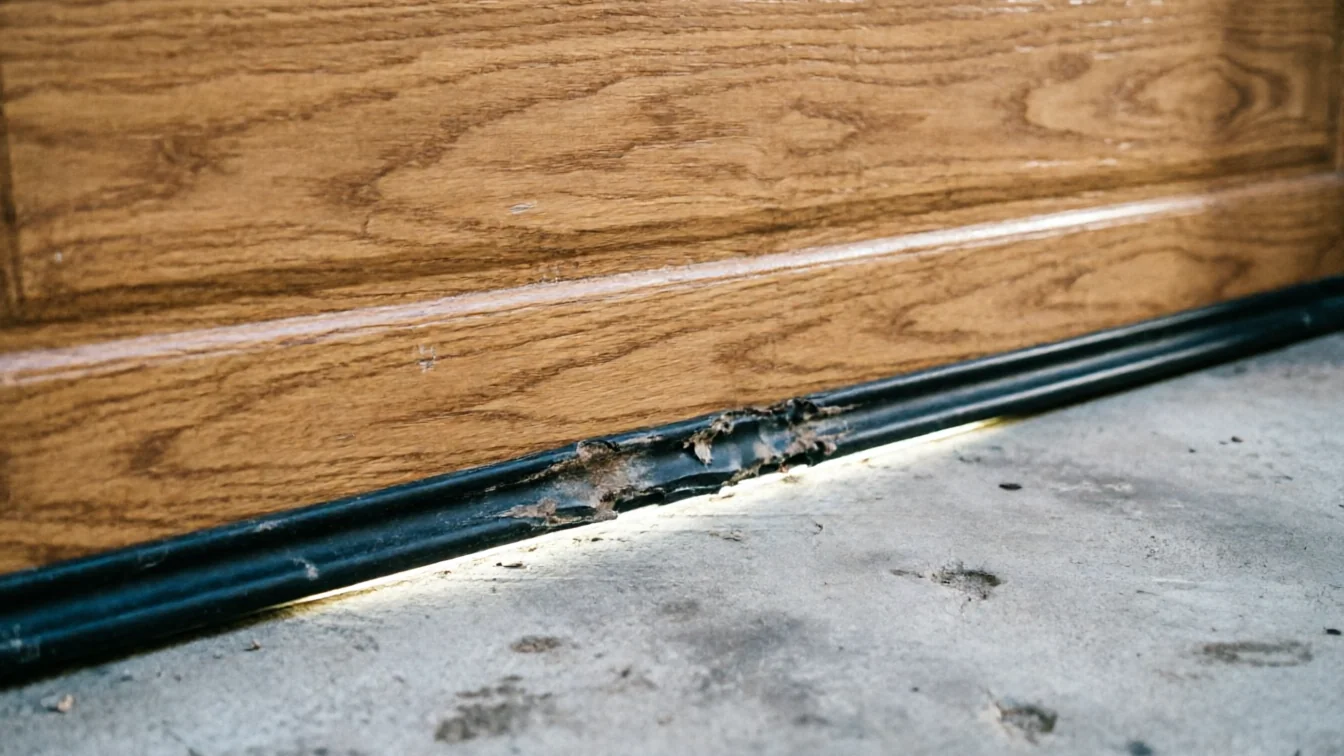
That matters because weather seals aren't built to last the life of the house. They're built to last maybe a decade before the rubber hardens and pulls away from the slab or the jamb. In a home from this era, the seal you've got right now is very likely not the original - it's whatever got tacked on at some point, sometimes without matching the actual gap it needs to close. You end up with a door that looks shut but still moves air, dust, and in wetter stretches, standing water, right along the bottom edge.
With 27,340 owner-occupied houses across the service area, this isn't a rare problem. It's the baseline condition of an older garage that nobody's touched since it was built.
What Local Conditions Do
Santa Rosa sits in a mild temperate band. That's good news in one sense - you don't get the freeze-thaw cycling that splits rubber seals apart in a single hard winter, the way it happens in colder climates. A seal here doesn't crack from ice.
It still fails, just more slowly and less obviously. Decades of seasonal humidity swings dry the rubber out from the inside, so it loses the give it needs to actually seat against the slab. Combine that with a house built in the 1960s or 70s, where the slab itself has settled unevenly over fifty-plus years, and you get a gap that the original seal design was never meant to span. The seal looks intact. It just isn't doing its job anymore.
The draft you feel at the bottom edge on a cool morning usually isn't a torn seal - it's a seal that's thirty years past its working life, pressed against a slab that's shifted since it was installed. That's a slower, quieter kind of failure than what you'd see in a harsher climate, and it's easy to miss until you're standing in the garage noticing the cold coming through.
What You Pay
We don't quote a number without seeing the door, and we won't start one here. What we can tell you is what drives the cost on a house like the ones common in this area. A single door seal replacement on a standard panel width is a different job than a double door built to an older frame size that doesn't match current stock - and plenty of garages from the 1960s and 70s were sized to dimensions that aren't standard anymore.
The other variable is the frame itself. If the jamb has warped or the slab has settled enough that the gap isn't even side to side, a new seal alone won't close it. At that point you're not buying a seal, you're buying a seal plus some correction to the opening it has to seal against, and that's a bigger job.
Honest limitation: if the door is original to a house built before the 1990s and the frame has shifted significantly, we'll often tell you that replacing the door is a better use of your money than patching seals on a frame that keeps moving under them.
What to Check
Walk out to the garage on a cool morning and look at the bottom edge of the door from outside, at ground level, with the door shut. Daylight visible under any part of the seal means it's not seated - either the rubber is hard, or the slab underneath isn't level anymore.
Run a hand along both side jambs where the door meets the frame. On houses from this era, a soft or crumbling vinyl bulb here is common; original material from a 1960s or 70s build has had a long run. Check the top seal too, where the door meets the header - it's the one most owners forget.
If you can slide a sheet of paper under the bottom seal and pull it out without resistance at any point along the width, that's a gap big enough to move air. One gap near a corner usually means slab settling. A gap running the full width usually means the seal itself is the problem, not the frame - and that's the cheaper fix of the two.
Frequently asked questions
Why does my garage door let in a draft even though it looks closed all the way?
In a lot of Santa Rosa houses from the 1960s and 70s, the original weather seal has outlived its working life, and the slab underneath has settled unevenly over the decades. The door can sit flush and still leave a gap along part of the bottom edge, which is where the draft gets in.
Does Santa Rosa's climate wear seals out faster than other places?
Not faster in the way cold climates do - there's no freeze-thaw cracking here since the area sits in a mild temperate band. But decades of seasonal humidity swings still dry out the rubber over time, so seals in older garages fail slowly rather than suddenly.
Will a new seal fix a door that still lets light underneath it?
Sometimes. If the gap is even across the width, a new seal usually closes it. If the gap is worse at one corner, the slab or frame has likely shifted, and a seal alone won't fix that - you're looking at frame correction or, on an older door, replacement.
Related garage door services in Santa Rosa
More garage door guides
Book garage door service in Santa Rosa
Call now or request a quote - tell us what the door is doing and where you are.