Santa Rosa, CA · Garage Door Service
Garage Door Opener Installation for Calistoga Homes
Opener installs and swaps for Calistoga's 1970s-era homes, done by a Santa Rosa crew that drives the 12 miles out and matches hardware to older track and header setups.
- Repairs & new doors
- Springs & openers
- Serving 8 nearby communities
Stocked Parts
The openers we carry on the truck cover both ends of what Calistoga needs. Most houses here were built around 1975, which means a lot of garages still have the original wood jamb and a header that was never drilled for a modern unit's mounting plate. We carry belt-drive and chain-drive openers in the common half-horsepower and three-quarter-horsepower sizes, plus the brackets and longer rail sections that older low-slope ceilings often call for. What we don't stock is anything specialty-order, like a wall-mount jackshaft unit for a tight-clearance garage - those take a few days to get in, and we'll tell you that up front rather than promise same-day on a part we don't have in the van. If your opener predates the 1993 federal rule requiring photo-eye safety sensors, we replace the whole unit rather than retrofit it; that's not a repair worth doing.
How Long It Takes
A straight swap - same mounting points, same door, new opener head - usually runs under three hours once we're on site. Add time if the garage is one of Calistoga's older single-car setups where the header needs reinforcing to hold a new motor mount, which is common in homes from the 1975 era that weren't built with a motorized opener in mind. We drive out from Santa Rosa, about 12 miles, so we schedule the trip as one job rather than splitting a diagnosis visit from the install - that keeps the cost of the drive out of your bill twice.
What Can Go Wrong
The most common failure we see on Calistoga's older stock isn't the opener motor itself - it's the connection between a 1970s-era wood door and a modern opener's force settings. These doors are heavier than the steel sectional doors openers are tuned for by default, so an opener installed without adjusting the up-force and down-force limits will either strain the motor or let the door reverse on a false signal. We also run into garages with no dedicated outlet near the mounting point, which means part of the job is coordinating a plug for the unit and the safety sensors rather than assuming the wiring's already there. The mild coastal-valley climate here doesn't freeze hardware or swell wood the way harder winters do elsewhere, so corrosion and seized track bolts are less of what slows us down than the mismatch between old door weight and new opener tuning.
Getting It Booked In
Tell us the door's age and whether it's wood or steel when you call - that's usually enough for us to bring the right opener strength on the first trip instead of a second visit for the correct unit. Since we're coming from Santa Rosa, we batch Calistoga jobs where we can, so a little flexibility on the day helps us get there sooner. With roughly 2,095 households in Calistoga, this isn't a daily route for us the way closer towns are, so booking a day or two ahead works better than a same-day call.
How We Fix It
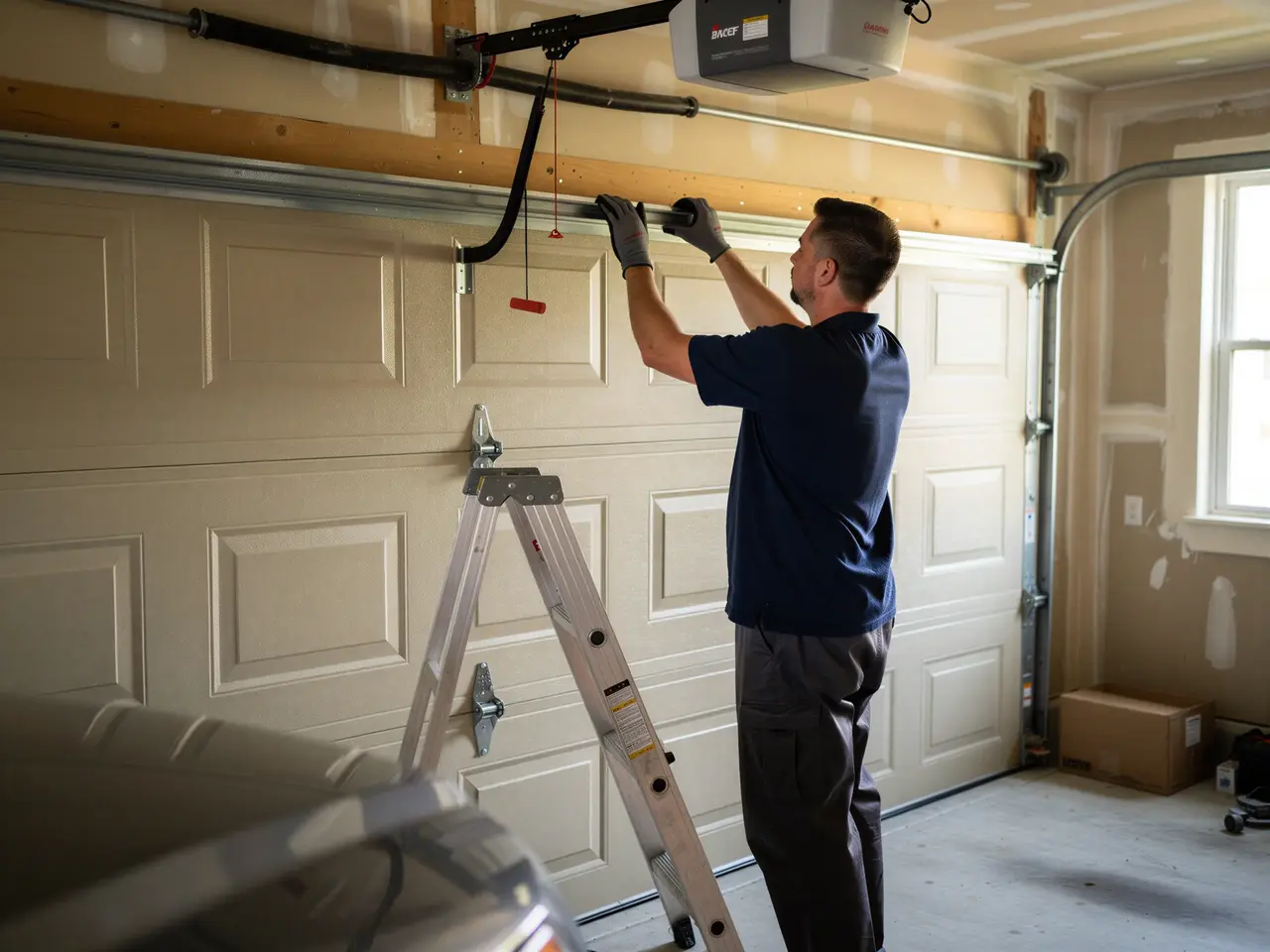
We start by checking the door itself before touching the opener - balance, spring tension, and whether the rollers and hinges are original. An opener fighting an unbalanced door will burn out early no matter how good the unit is, so on older Calistoga doors we often rebalance the spring as part of the install rather than bolt a new motor onto a door that's already working too hard. From there it's a standard mount: header bracket, rail, motor head, and the photo-eye sensors set low enough to clear any threshold gap. We test the force settings against the actual door weight rather than leaving factory defaults, which matters more on a heavier 1970s wood door than it would on a lighter modern steel one. Last step is a full open-close cycle test with the safety reversal check, since that's the part most often skipped on a rushed install.
Why It Happens Here
Calistoga's housing stock centers on 1975, which puts most of its garages squarely in the pre-opener-standard era - these were doors built to be lifted by hand, with openers added as an afterthought sometime later. That history shows up as mismatched hardware: a 1990s opener on a 1975 door, or a header that was never properly reinforced for the added weight and vibration of a motor. The mild temperate climate here means the materials themselves hold up fine; it's the mismatch in generations of equipment, not weather damage, that drives most of our opener calls in this part of the service area. Learn more about coverage in Calistoga or see our main opener installation page for Santa Rosa.
Frequently asked questions
Do you have a branch in Calistoga?
No. We're based in Santa Rosa and drive out to Calistoga, about 12 miles, for every job. We schedule the trip as a single visit covering both diagnosis and install so you're not paying for us to come out twice.
Will a new opener work with my old wood garage door?
Usually yes, but the force settings need to be adjusted for the door's actual weight. Wood doors from Calistoga's 1975-era housing stock are heavier than the steel doors most openers are tuned for out of the box, so we set tension to match rather than leave factory defaults.
How old does my opener have to be before you recommend replacing instead of repairing?
If it predates the 1993 federal photo-eye safety rule, we replace rather than retrofit. Beyond that, if the motor is original and parts for it are hard to source, replacement is usually the better value than chasing a repair on an obsolete unit.
More garage door services in Calistoga
Book garage door service in Santa Rosa
Call now or request a quote - tell us what the door is doing and where you are.